

Fill Out Schedule C (Form 1040) in 2026
Calculate your sole proprietorship's net profit or loss for your tax return with a fillable, printable copy ready here.
This website is not affiliated with any government agency.
How it works

1. Open the form
Click “Fill form” above to open the form in our editor.

2. Add details
Complete all required fields to finalize your form.

3. Save as PDF
Download your filled form as a PDF, ready to print or submit anywhere.
What is Schedule C (Form 1040)?
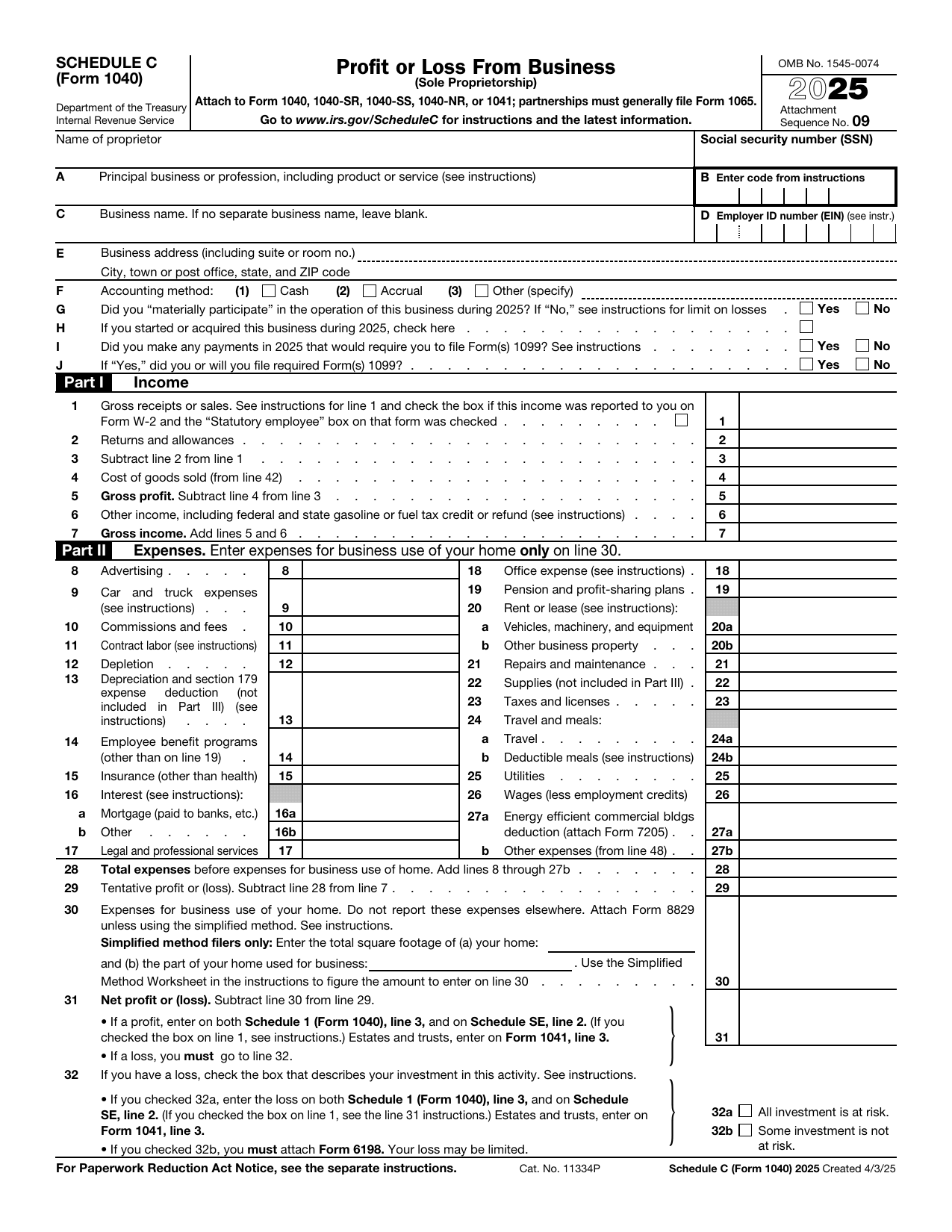
Schedule C (Form 1040) is an IRS tax form that you attach to your individual income tax return. You use it to report income or loss from a business you ran or a profession you practiced as a sole proprietor. This often includes work by freelancers, gig workers, and owners of single-person businesses.
The form lists your business income and allowed expenses. Subtracting expenses from income gives you a net profit or loss. IRS Form 1040 Schedule C: line 31 shows this result, which carries to other parts of your tax return. Your net profit may also be used to calculate self-employment tax. The 1040 Schedule C instructions explain which income and expenses to report. Completing the form correctly helps you claim valid deductions, avoid paying too much tax, and reduce the risk of penalties for inaccurate reporting.
What is Schedule C (Form 1040) used for?
You use Schedule C when you earn or lose money from a business you run or a profession you practice as a sole proprietor. The activity must have income or profit as its main purpose and be carried on with continuity and regularity. It can cover payments reported on Forms 1099-NEC, 1099-K, or 1099-MISC, a business with no income, and certain qualified joint ventures.
The form calculates your net profit or loss. IRS Form 1040 Schedule C: line 31 shows this result, which generally carries to Schedule 1 and may affect Schedule SE and self-employment tax. Check the 1040 Schedule C instructions to confirm where to report the amount for your tax year.
How to fill out Schedule C (Form 1040)
- 1Enter your name and SSN in the header. Add your EIN on line D, if applicable.
- 2Describe the business or professional activity that produced the income reported on line 1.
- 3Report gross receipts and other business income in Part I, following the 1040 Schedule C instructions.
- 4List allowed business expenses in Part II and total them accurately.
- 5Complete Part III for cost of goods sold and Part IV when the vehicle rules listed on the form apply.
- 6Calculate the result under IRS Form 1040 Schedule C: line 31. For a loss, select box 32a or 32b based on your amount at risk.
- 7Download a separate completed Schedule C for each business, then transfer line 31 to Schedule 1 and Schedule SE as required.
Where to get a blank Schedule C (Form 1040)
Schedule C (Form 1040), Profit or Loss From Business (Sole Proprietorship), is issued by the Department of the Treasury, Internal Revenue Service (IRS). You can also get the current blank form and official instructions from the IRS website.
PDFLeader has a blank Schedule C (Form 1040) pre-loaded in our browser-based editor, so you do not need to download a template from another source. PDFLeader helps you fill out and download the completed form for future use. PDFLeader does not file or submit the form to the IRS.
Where to send Schedule C (Form 1040)
Schedule C (Form 1040) is not filed on its own. Attach it to Form 1040, 1040-SR, 1040-SS, 1040-NR, or 1041, as applicable. To file electronically, include the completed schedule with your federal tax return through tax preparation software or an authorized e-file provider.
If you file by mail, place Schedule C in the correct sequence with your paper return. Send the full return to the IRS service center assigned to your location. Check the mailing address listed in the instructions for the tax return you are filing, since the correct IRS office can vary by state and payment status.
Who needs to complete Schedule C (Form 1040)?
Sole proprietors and owners of single-member LLCs taxed as sole proprietorships complete Schedule C. This group includes freelancers, independent contractors, and gig workers who run unincorporated businesses. Spouses in a qualified joint venture may each need a separate Schedule C. The 1040 Schedule C instructions explain these filing rules. Partnerships generally file Form 1065 instead.
You use the result to complete your individual tax return. For the transfer step, IRS Form 1040 Schedule C: line 31 shows the net profit or loss. You may also use that amount on Schedule SE to calculate Social Security and Medicare taxes. The IRS uses the reported data to process the return and administer tax rules for small businesses and self-employed taxpayers.
Do you need to sign Schedule C (Form 1040)?
No, you do not need to sign Schedule C separately. It has no signature line because your signature on Form 1040 covers its attached schedules. You can fill out Schedule C in PDFLeader and download the completed form, then file it with Form 1040 elsewhere. PDFLeader does not submit forms. Check the latest IRS updates before filing.
What information/documents are required?
Have your name of proprietor and Social Security number (SSN), plus your business name, NAICS activity code, accounting method, and material participation details. Gather records for gross receipts or sales and returns and allowances, including every sales channel and customer refund. If you sell products, keep inventory and purchase records for cost of goods sold from Part III; service businesses enter zero. Also collect records for other income.
Keep receipts, invoices, and records for Part II, lines 8–27a, expenses by category. For line 27a/Part V, prepare each other expense type and amount. For line 30, gather home-office costs and attach Form 8829 unless you use the simplified method. Use the 1040 Schedule C instructions for these entries. Check IRS Form 1040 Schedule C: line 31 to calculate net profit or (loss), then report a profit on Schedule 1 (Form 1040), line 3, and Schedule SE, line 2.
When is Schedule C (Form 1040) due?
Schedule C (Form 1040) is due with your annual individual income tax return, usually by April 15. For a 2025 return filed in 2026, the due date is April 15, 2026. If April 15 falls on a weekend or legal holiday, the deadline moves to the next business day.
You may file Form 4868 by the original due date to get an automatic six-month filing extension to October 15, 2026. This gives you more time to file, but not more time to pay. Estimate and pay any tax owed by the original April deadline.
When is Schedule C (Form 1040) not required?
You do not need Schedule C (Form 1040) when an activity is a hobby, is not carried on for profit, or occurs only on a sporadic basis. A business activity must have continuity and regularity and be conducted to earn income or profit.
Other reporting rules may apply based on the income. A qualified joint venture may report rental real estate income on Schedule E when the activity is not subject to self-employment tax. Income from a single-member LLC may also appear on another schedule if its nature calls for different treatment. Report deductible retirement plan contributions for yourself on Schedule 1, not Schedule C. Check current IRS guidance for your activity before choosing a schedule.
FAQ

What expenses can you deduct on Schedule C?
You may deduct business expenses that are ordinary and necessary. Ordinary means common in your type of work, while necessary means helpful and suitable for the business. Common deductions include advertising, supplies, insurance, wages, vehicle costs, and qualified home office expenses. Keep receipts and records that show the business purpose of each cost.
What does "materially participate" mean on Schedule C?
You materially participate if you take an active, regular, and substantial role in running the business. You may qualify by working more than 500 hours during the year. Another test applies if you work more than 100 hours and no one else works more than you. The IRS has other tests, so review the current 1040 Schedule C instructions if your role is less clear.
What is the "investment at risk" box on Schedule C?
This box asks if you could lose all the money or property invested in the business. Check the all-investment-at-risk box if none of your investment is protected from loss. If some amount is protected, such as a loan you are not personally required to repay, the at-risk rules may limit your deduction. The entry labeled IRS Form 1040 Schedule C: line 31 shows the tentative profit or loss, while Form 6198 may be needed to calculate an allowed at-risk loss.
Do I answer yes or no to qualified business income on Schedule C?
Schedule C does not contain a general yes-or-no question for the qualified business income deduction. First calculate your net profit or loss on Schedule C. You then use that result to determine the deduction on Form 8995 or Form 8995-A, if you qualify. Some income and business types have special limits.
Can you take both depreciation and mileage on Schedule C?
You cannot claim vehicle depreciation in addition to the standard mileage rate for the same vehicle and year. The mileage rate already includes an amount for depreciation. If you use the actual-expense method, you may deduct the business share of depreciation and other allowed vehicle costs. You can still depreciate separate business assets, such as tools or equipment.
Is Schedule C the same as a 1099/Schedule 3/Form 1040?
No. Schedule C reports income and expenses from a sole proprietorship and is attached to Form 1040. A 1099 is an information return that a payer may send to you and the IRS. Schedule 3 reports certain credits and payments. Each document serves a different tax purpose.
Is DoorDash income reported on Schedule C?
In most cases, yes. If you work as an independent contractor, report your gross DoorDash earnings as business income on Schedule C. Include all taxable earnings, even if you did not receive a Form 1099-NEC or Form 1099-K. You may deduct qualified delivery expenses if you have records to support them.
What happens if you don't file Schedule C?
If Schedule C was required and you leave it out, your tax return may understate income and self-employment tax. The IRS may send a notice and assess added tax, penalties, and interest. It can compare your return with Forms 1099 filed by payers. If you already filed an incorrect return, you may need to amend it with Form 1040-X and include the missing schedule.
What triggers an IRS audit on Schedule C/what percentage get audited?
Common audit concerns include income that does not match Forms 1099, very large deductions compared with revenue, repeated losses, and personal costs claimed as business expenses. A deduction does not cause an audit by itself, but you need records to support every amount. The IRS does not publish one fixed audit percentage for all Schedule C filers. Examination rates vary by income, return type, tax issue, and year.
Does PDFLeader have a refund policy?
Yes. The Refund Policy sets out the cases where a refund applies and how to send a request.
What if I have any issues and need help?
We've got your back 24/7! Just call +1 (844) 548-9416 or email support@pdfleader.com, and we'll sort things out for you.
How do I cancel PDFLeader?
You can cancel your subscription from account settings, or contact the support team and ask them to cancel it. You keep access until the current billing period is over.
Related forms
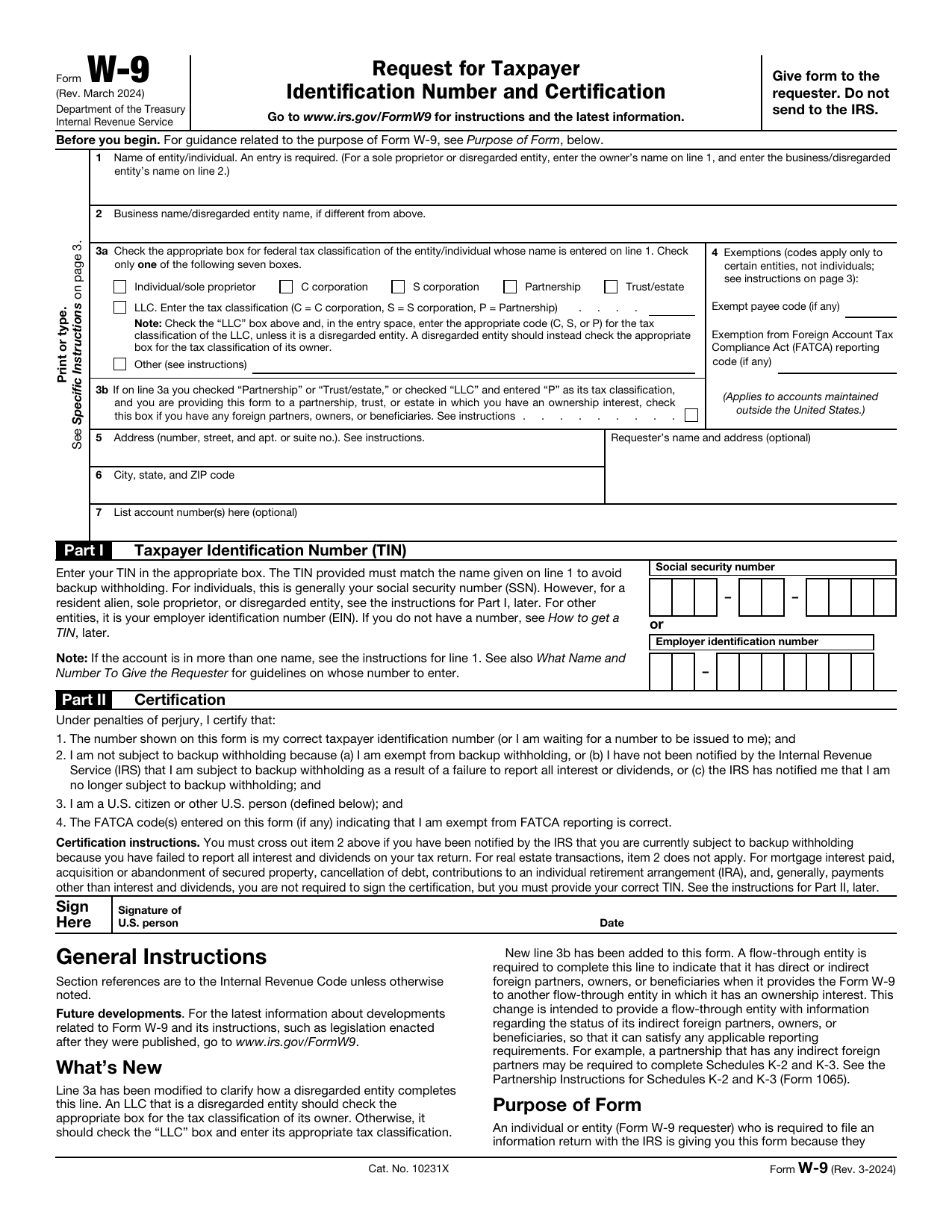 W-9 FormTax FormsGive a requester your correct TIN and certify your U.S. person and backup withholding status in a fillable, printable copy.Updated Oct 5, 2026
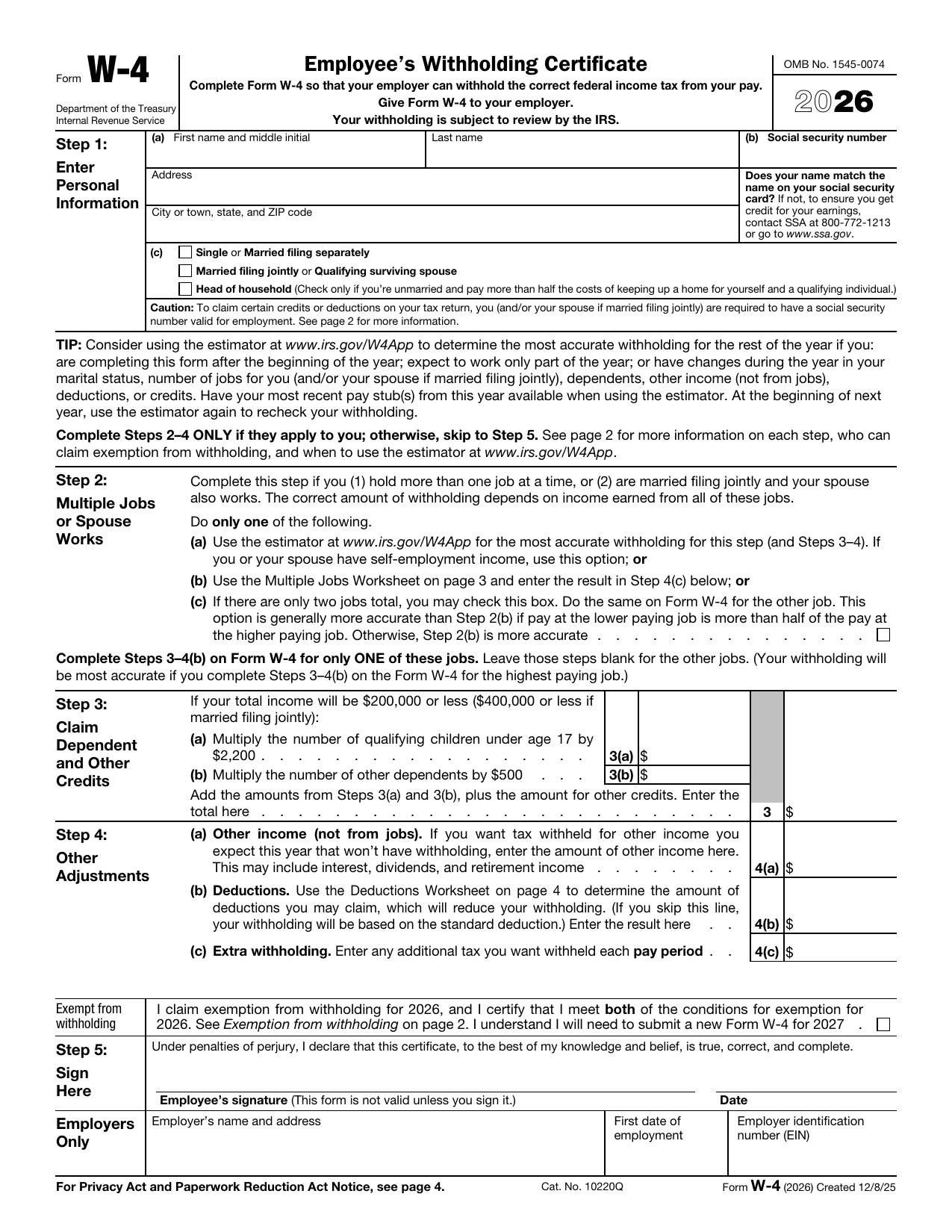 W-4 FormTax FormsSet how much federal income tax your employer withholds from your pay. A fillable, printable copy is ready here.Updated Oct 5, 2026
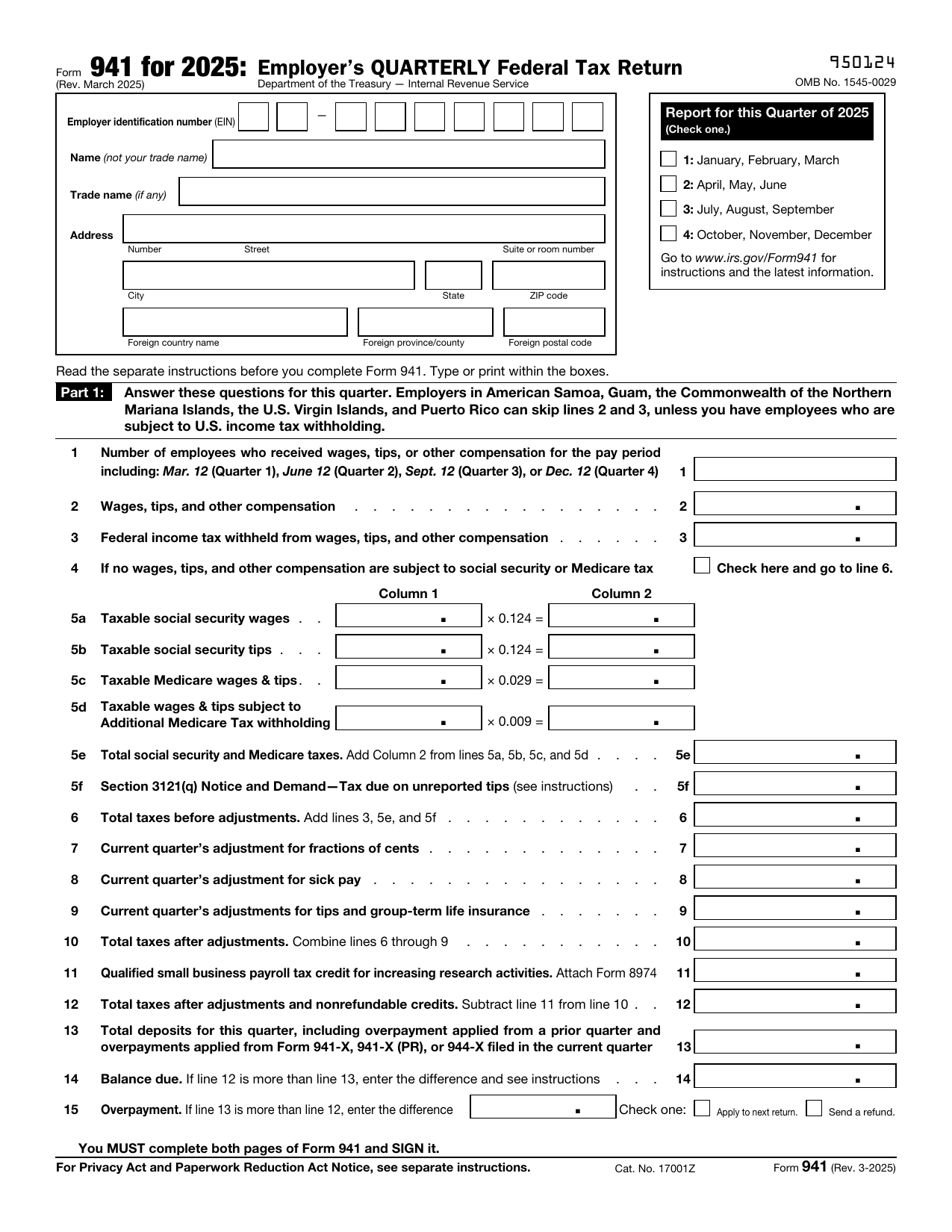 941 FormTax FormsReport your quarterly wages, withheld income tax, and payroll tax share with a fillable, printable copy ready here.Updated Oct 5, 2026
 8850 FormTax FormsAsk your state agency to certify your new hire for the work opportunity credit. Your fillable, printable copy is ready here.Updated Oct 5, 2026